What Is Forest Succession? A Beginner's Explainer for Woodland Owners
A plain-English guide to how bare ground turns into woodland, the stages along the way, and why that process should shape every management decision you make.
Picture a field gate that hasn't been opened in fifteen years. The grass is still there, but it's taller and thinner. Brambles have knitted themselves into low, prickly mounds along the hedge. There's a scatter of birch saplings in the corner where the seed blew in, and a single, confident oak no taller than your shoulder. Nobody planted any of it. Give that field another thirty years and you'll struggle to walk through it. That quiet, unstoppable process is succession, and if you own or manage woodland, it is happening on your ground right now — whether you've planned for it or not.
What Succession Actually Means
Forest succession is simply the pattern of change that vegetation goes through over time on a given piece of ground. It moves from simple communities of plants to more complex ones, generally from short-lived, light-demanding species to long-lived, shade-tolerant ones. It isn't a single event or a tidy timetable. It's a shifting balance between what's already growing, what's trying to establish, and what the site will physically allow.
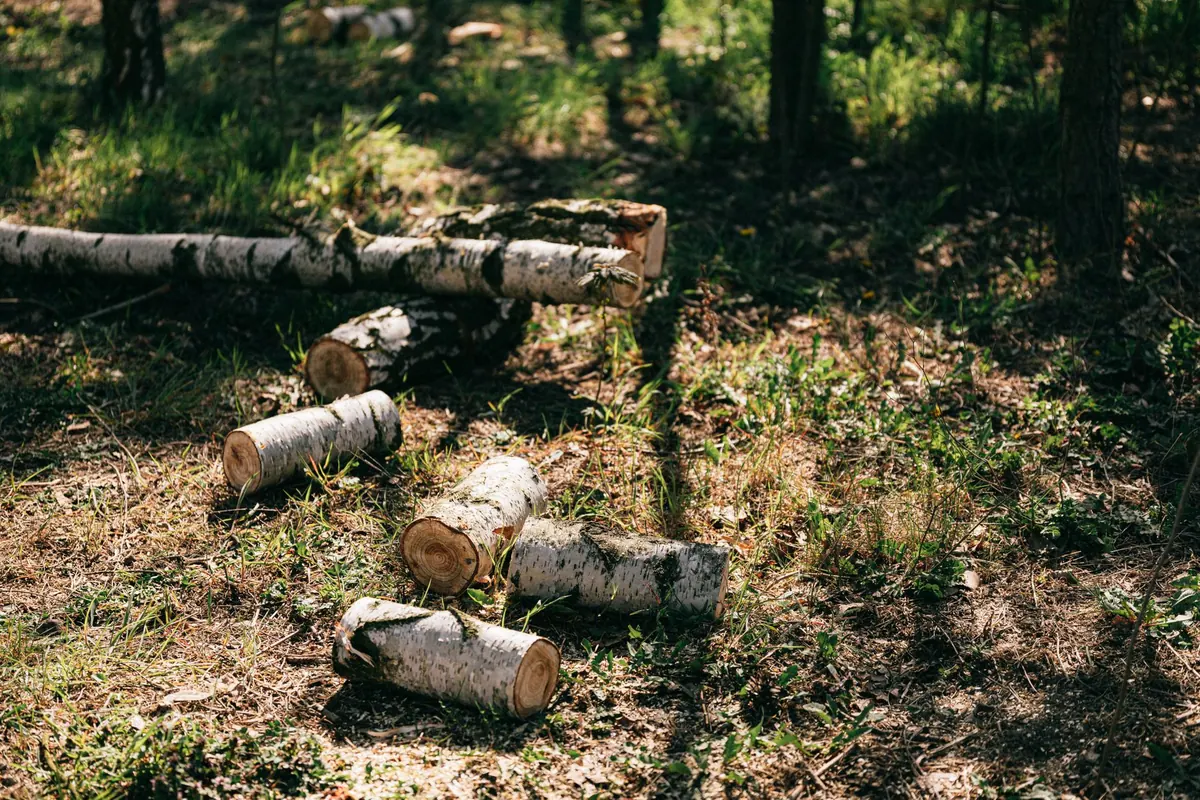
Three things drive it. First, light: as taller plants close over the ground, the species below have to cope with shade or die out. Second, soil: leaf litter, root activity and the slow work of fungi and worms build deeper, richer soil that suits different plants. Third, disturbance: a storm, a fire, a rabbit population, a chainsaw. Disturbance resets the clock, sometimes to zero, sometimes just back a stage or two.
The old idea of a single "climax" forest that every site marches towards has fallen out of favour, and that's worth knowing. Woodland is rarely a finished thing. Most woods in Europe have been cut, grazed and coppiced for centuries, and they're better understood as a rolling pattern of patches at different ages rather than a destination.
The Stages, One by One
The sequence below is the classic pattern on abandoned farmland or a cleared patch in a temperate wood. Treat it as a rough guide, not a rulebook — the order and timing vary enormously with soil, climate, seed sources nearby and how much browsing pressure there is.
- Bare ground and the first arrivals. Annual grasses and weeds, then tough perennials. These are opportunists, quick to seed and quick to die. On poor soil, look for mosses and lichens first.
- Grass and scrub. Bramble, gorse, broom, hawthorn, willow. Dense, thorny and often unpopular with owners — but this is the nursery. Hedge and woodland birds nest in it, and tree seedlings survive inside it because browsing animals won't push through the spines.
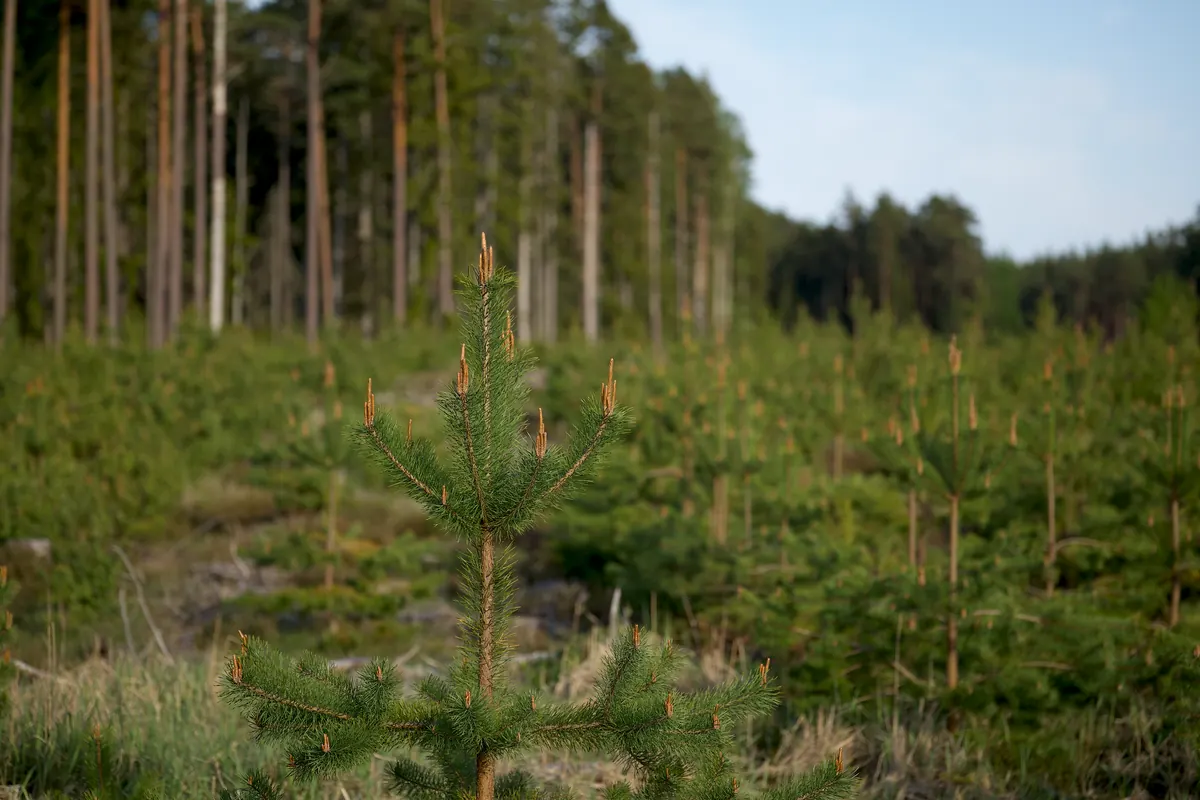
- Pioneer woodland. Fast, light-demanding trees get their heads up: birch, willow, aspen, Scots pine, alder on wet ground. They're short-lived and thin-canopied, letting plenty of light through. Alder and broom fix nitrogen and start improving the soil.
- Mixed woodland with longer-lived trees. As the pioneers thin out, oak, ash, sycamore, beech, hornbeam and their like establish in the gaps. Seedlings of these species often germinate under the pioneers' shelter and then wait, growing slowly in the shade.
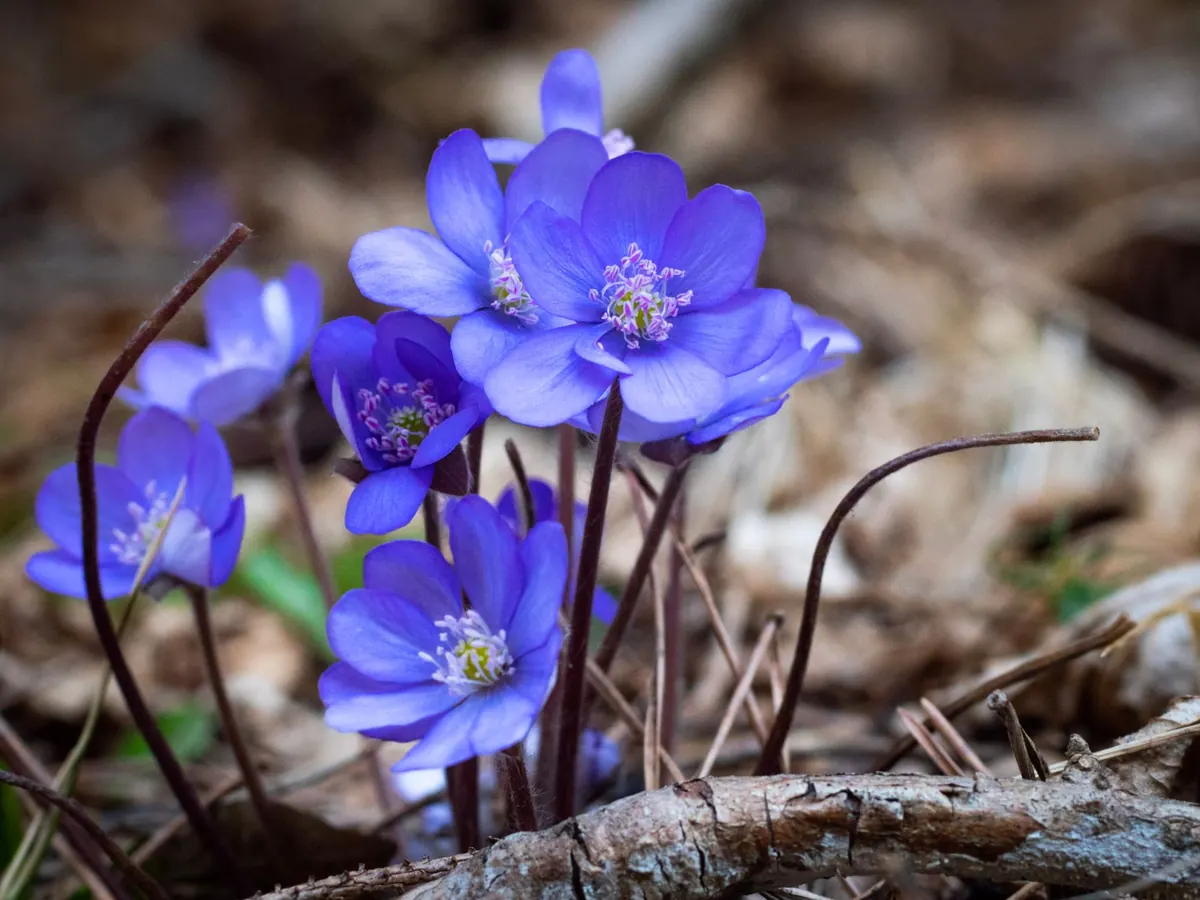
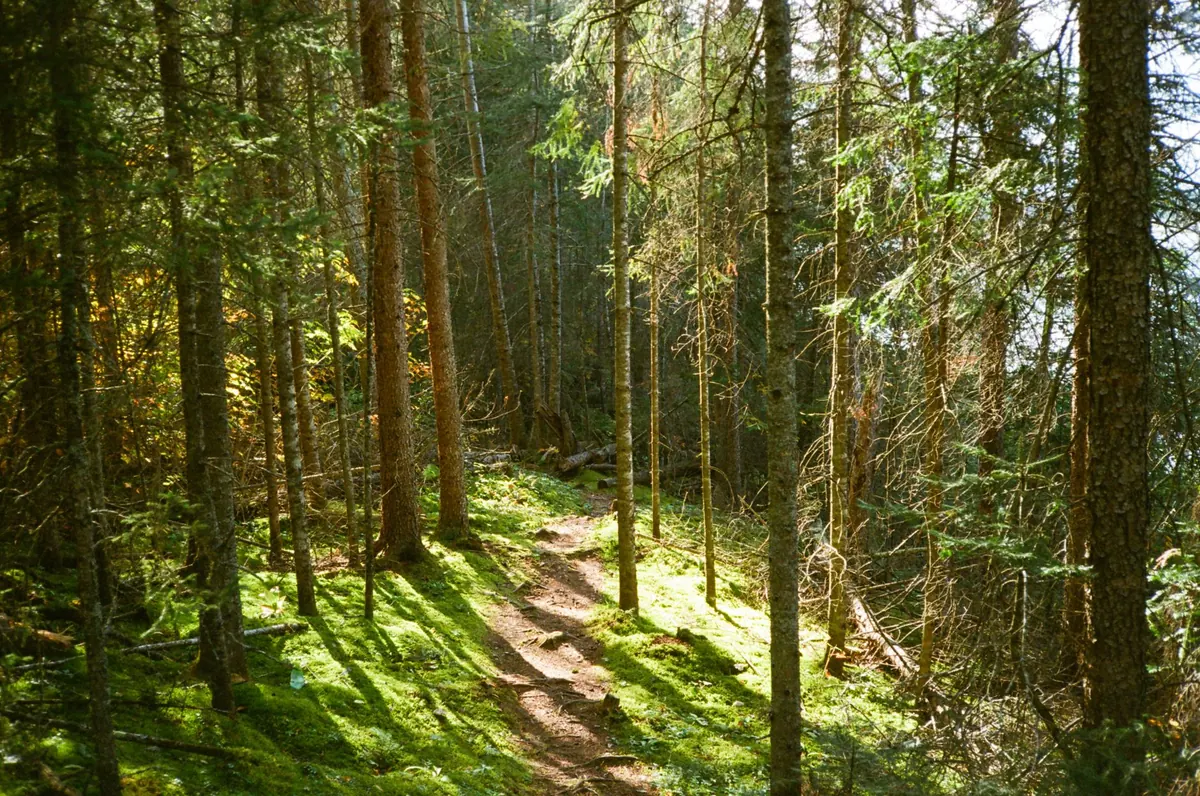
- Mature, shade-dominated woodland. Shade-tolerant trees dominate the canopy; the field layer becomes woodland plants — bluebell, wood anemone, dog's mercury. Regeneration happens mostly in gaps created by dying or fallen trees, in small and medium patches.
Alongside the trees runs a less visible succession: the soil. The community of fungi, bacteria and invertebrates shifts stage by stage, and with it the wood's ability to hold water and cycle nutrients. You can't see it change, but you can absolutely see the results.
Primary, Secondary, and What Fits Your Land
Ecologists split succession into two broad types, and the distinction is useful when you're deciding how much to intervene.
Primary succession
This is colonisation of ground that has never carried vegetation — bare rock, a retreating glacier's rubble, fresh volcanic ash, a newly exposed sand dune. It's slow, because there's no soil to start with. A lichen crust might take decades to become a mat of moss, and centuries to become anything you'd call woodland.
Secondary succession
This is regrowth on ground whose vegetation has been removed but whose soil remains — a felled coupe, an abandoned field, a fire site, a cleared hedge line. It's much faster, because the seed bank, the roots and the soil life are all still there. Most of what happens in working woods is secondary succession, and most of it is quick enough to watch during your tenure as an owner.
Why Succession Matters at the Point of Decision
Every practical choice you make in a wood nudges succession one way or the other. Knowing which way is the difference between a plan and a guess.
Regeneration. If you want oak in fifty years, you need to know that oak seedlings survive in semi-shade and then need light to grow on. Clear the canopy too hard and you get a flush of bramble, bracken or birch instead. Leave it too dark and the seedlings sulk. The sweet spot is usually a moderate gap, or thinning that lets in light without tearing the fabric of the wood.
Browsing. Deer, rabbits, sheep and ponies can hold succession in a stall for years, keeping a wood at the scrub stage with a browse line and no saplings. Fencing a coupe or protecting individual stems changes the outcome more than any planting plan.
Invasive and aggressive species. Rhododendron, laurel, sycamore and bracken can capture a site and effectively lock succession out of the mix you wanted. Catching them early costs a fraction of the effort of catching them late.
Open space. Not every bit of a wood should be closed canopy. Glades and rides held at an early stage by mowing or grazing are part of the mosaic, and many woodland butterflies and plants depend on them. Think of succession as something you steer to produce a range of ages across the site, not something you simply defeat.
Reading the Signs on Your Own Ground
You can assess where each part of your wood sits on the sequence with a walk and a notebook. Look for:
- Light at ground level. Deep shade with bare soil underneath signals a late-stage, closed canopy. Dappled light and a mixed field layer suggests a wood in transition.
- Species mix. Lots of birch, willow and hawthorn means early days. Oak, beech and hornbeam with shade-tolerant ground flora means the wood has matured.
- Regeneration. Are there seedlings and saplings at knee height, or is the browse line flat and continuous? Absence tells you something is eating the future.
- Deadwood and gaps. Mature woods create their own small clearings when trees fall. A wood with no gaps and no deadwood is being held still, often by past management.
- Ground flora. Ancient woodland indicators such as bluebell, wood anemone and dog's mercury suggest long continuity. A field layer of nettles, cleavers and sycamore seedlings suggests recent disturbance.
A Practical Way Forward This Season
Start by mapping your wood into rough zones — young scrub, mid-stage, mature canopy, permanent open ground — even if the map is a sketch on the back of an envelope. For each zone, write down what stage it's in and what you'd like it to be in twenty years. The gap between the two is your work list.
Then prioritise the cheap, timely interventions: catch a stand of laurel or rhododendron before it spreads, protect a handful of well-placed saplings rather than planting hundreds, mow a ride in late summer to hold it open, thin a dense pioneer patch to let the longer-lived trees beneath it come through. Take photographs from the same spots each year. Succession is slow enough that you won't notice it day to day, and fast enough that the photos will surprise you.
And leave room for the unexpected. A storm that drops a mature beech creates a gap, and that gap is the next generation's opportunity. The best woodland managers work with that process rather than against it, nudging here, holding back there, and accepting that the wood will always be a little ahead of the plan.
Photo: Lauri Poldre / Pexels