Moss, Lichen, and Ferns: What Their Presence Tells You About Forest Health
Mosses, lichens, and ferns are quiet recorders of moisture, air quality, and woodland disturbance. Learn to read their presence on a forest walk and judge conditions with...
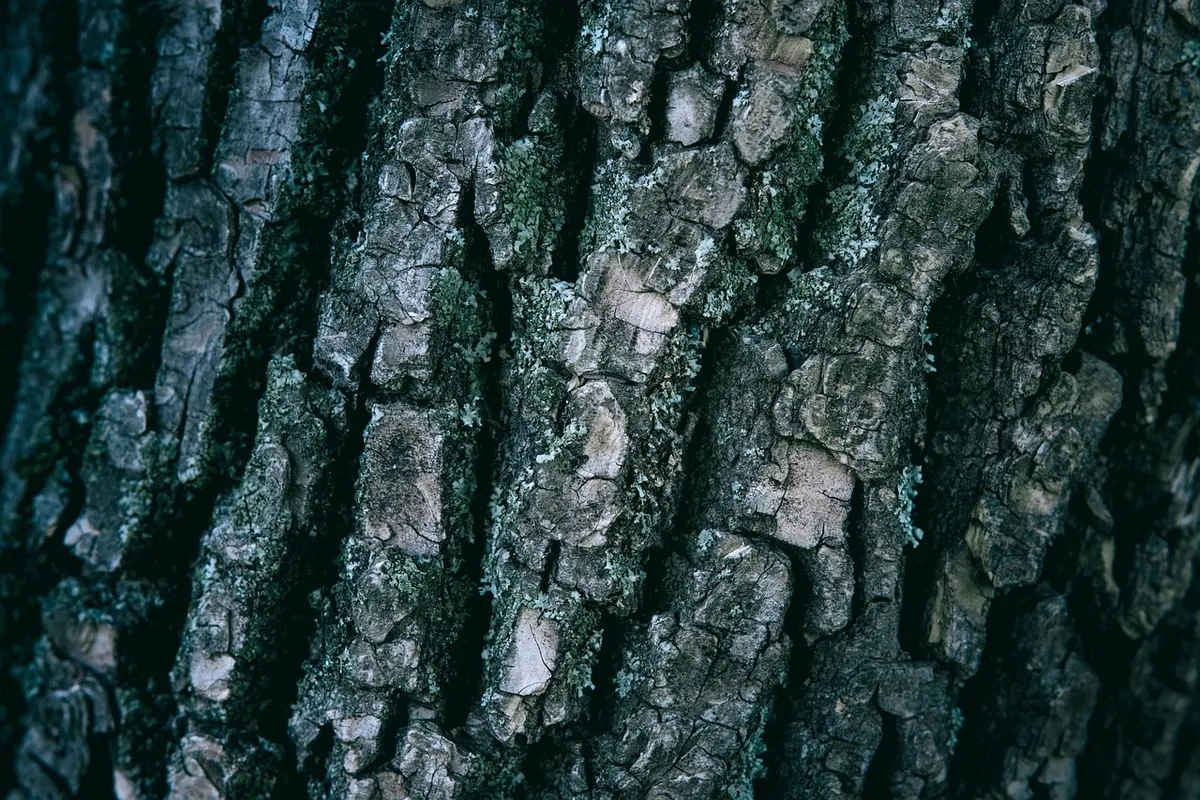
A forest floor can look uniformly green from the trail, but the green is not one thing. Moss, lichen, and ferns occupy different niches, respond to different pressures, and leave different clues. None of them is a laboratory test. They are field notes written in damp cushions, crusty patches, and unfurling fronds. Learn to read those notes and an ordinary walk becomes a conversation with the wood.
Moss: The Moisture Gauge You Can Read at a Glance
Mosses have no true roots. They take in water and nutrients across their leaves and stems, which makes them intimately tied to humidity, shade, and the way water moves through a site. A deep cushion on the shady side of an old stump says one thing; a thin green film on a compacted path edge says another.
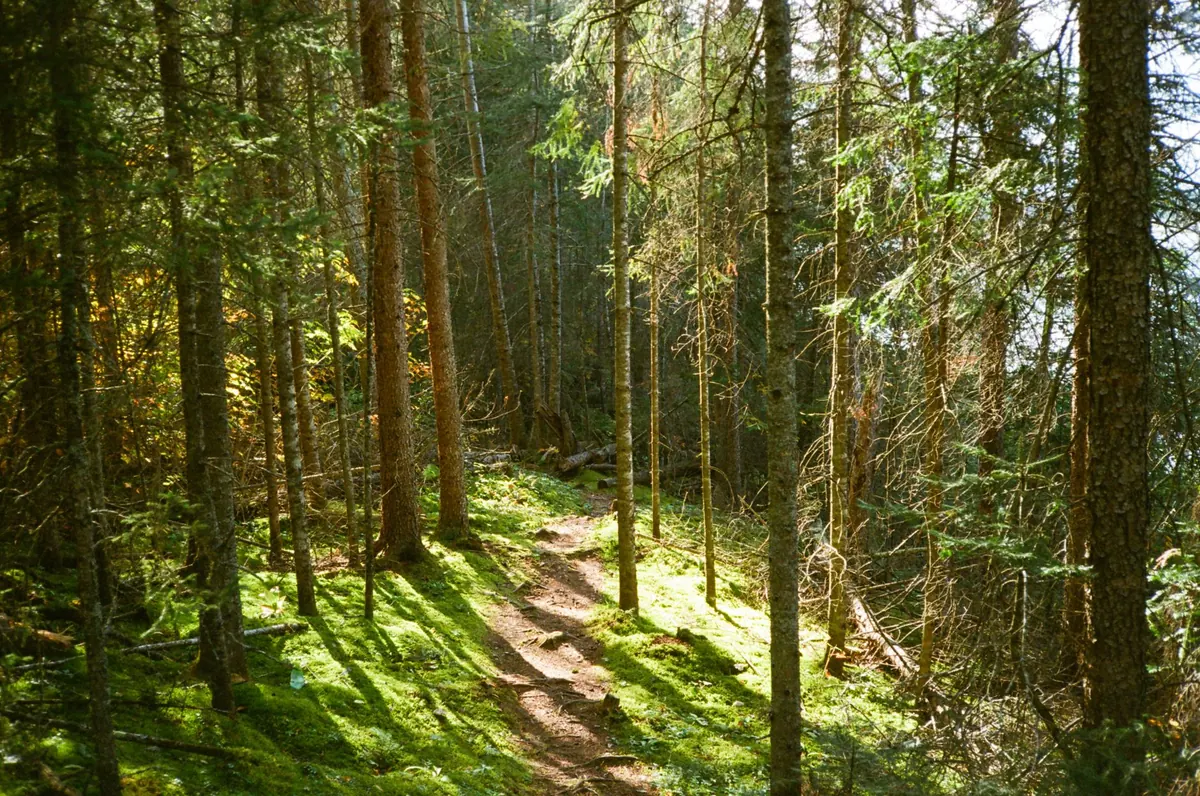
Look first at where the moss is growing. On tree bases, logs, and rocks in consistent shade, a thick carpet usually points to reliable dampness. In a hollow or along a bank, moss can mark a seep or a place where water lingers after rain. On a trail, moss often survives where soil has been pressed smooth and drainage has slowed. That is not a sign of a healthy woodland so much as a sign of water sitting where it should be moving.
Sphagnum mosses, with their pale, spongy look, belong in genuinely wet ground: boggy hollows, wet heath, the edges of pools. If you see them, the ground is likely saturated for much of the year. Cushion mosses on dry stone walls tell a different story: they can survive long dry spells and revive after rain, so their presence alone does not prove constant moisture. Check the texture. Damp moss is springy; dry moss is brittle and faded. A mix of both on the same log suggests a site that wets and dries rather than one that stays soaked.
Moss distribution also hints at light and disturbance. In a dense wood, it may creep up trunks and cover shaded rocks while the sunny path stays bare. After heavy thinning or a windthrow, moss on exposed ground can scorch or dry back. And because mosses absorb substances directly, they can hold pollutants as well as water. They are useful witnesses to moisture and continuity, but not a clean-air certificate on their own.
It helps to read moss by texture and position together. A north-facing bank with deep, springy cushions and moss creeping over leaf litter is likely to stay cool and damp for much of the year. A south-facing rock with a thin, brittle mat is a harsher surface that wets and dries quickly. On a fallen log, moss on the top and sides can show how often the wood is soaked; moss only in the crevices may mean the log sheds water. These small differences are more revealing than the mere presence of green.
Lichens: Tiny Air-Quality Recorders
Lichens are not plants. They are partnerships between fungi and algae or cyanobacteria, and they absorb much of what they need from the air. That makes them unusually responsive to air quality, humidity, and the age and stability of a woodland. They also grow slowly, so a rich lichen community on old bark or rock is a record of time as well as conditions.
You do not need to identify every species to read the general picture.
Start with Growth Form
- Crustose lichens paint bark and stone with thin, flat crusts. Many tolerate tougher conditions, including drier surfaces and some pollution.
- Foliose lichens have leafy lobes that lift slightly from the surface. They often need more moisture and cleaner air than crustose forms.
- Fruticose lichens are bushy or shrubby, sometimes hanging in strands. They are often the most sensitive to air pollution and disturbance, though species vary.
A trunk with only crusty patches is not necessarily unhealthy. It may be a young tree, a dry exposure, or a species with bark that sheds. But a mature tree carrying a mix of crustose, foliose, and fruticose lichens, especially where the air is humid and the canopy is open enough for light, suggests a more settled woodland history. The same goes for rocks and deadwood: lichen-rich surfaces usually mean the substrate has been left alone for a while.
Context matters. Some lichens thrive where nitrogen is high, so abundance alone is not proof of clean air. Shade, bark chemistry, and distance from dust and traffic all play a part. Use lichens as a prompt to look closer, not as a verdict.
Old stone walls, gateposts, and boulders can be especially informative. A wall that has stood in damp shade for decades may carry a patchwork of crusts, lobes, and bushy tufts, while a nearby fence post of treated timber may stay almost bare. The difference is not only air quality; it is substrate, age, and how often the surface dries out. Compare like with like. Lichens on a mature oak tell you something different from lichens on a metal sign.
Ferns: Clues to Soil, Shade, and Disturbance
Ferns are easier to read for moisture and shade than for air quality. They have roots and vascular tissue, so they respond to soil conditions as well as humidity. A stand of ferns in a hollow or at the foot of a bank often marks a flush, a spring, or a place where water collects. Ferns on a shaded bank can indicate ground that stays damp below the surface even when the path is dry.
Species help, but you can start with vigor. Large, fresh fronds in midsummer suggest enough moisture and light for that plant. Small, scorched fronds at the edge of a dry clearing suggest the limit of its tolerance. Lady fern tends to favour damp, shady ground; male fern is a familiar woodland fern of reasonably moist soils; hard fern often appears in damp, acidic shade. Bracken is the odd one out: it prefers drier, acidic ground and often spreads where land has been burned, grazed, or cleared. A hillside of bracken is not a sign of a wet wood. It is a sign of a different history.
Ferns also respond to disturbance. They colonise cut banks, drainage sides, and gaps in the canopy. If a fern bed is expanding into an open area, ask what changed: a fallen tree, a new ditch, or a track that now channels water. If ferns are retreating while moss takes over, the ground may be wetter or more shaded than before. Neither is automatically good or bad. The point is to notice the change.
Grazing and browsing can leave their mark too. Where deer or livestock pressure is heavy, palatable ferns may be cropped back while tough bracken or unpalatable species spread. A ferny glade that is tall and untouched suggests a different level of browsing than a short, nibbled fringe along a wood edge. Again, the fern is not a verdict; it is a clue to ask who has been using the wood and how often.
Reading Edges and Transitions
The most useful places to read these clues are often edges: where a path meets a bog, where a canopy gap opens, where a bank steepens, or where woodland gives way to field. Edges concentrate change. A mossy strip at the foot of a slope may mark water emerging from the soil. A fringe of ferns along a ditch may show where drainage is slow but not stagnant. A sudden switch from moss to grass can point to a change in soil depth, drainage, or light.
Look at transitions rather than isolated patches. A log that is mossy on one side and lichen-covered on the other is telling you about exposure. A rock that carries moss at its base and lichen on its dry crown is showing a moisture gradient in miniature. A path edge where moss creeps inward from both sides may be narrowing under low use, while a wide, bare center with moss only at the margins suggests steady foot traffic. These are small stories, but they add up.
What These Organisms Cannot Tell You
For all their value, moss, lichen, and ferns cannot tell you everything. They are not substitutes for soil tests, water sampling, or a full habitat survey. A mossy wood can still have polluted air; a lichen-rich rock can sit beside contaminated water; a fern bed can thrive in a site that is poor in other ways. The clues are indicators, not diagnoses.
A single visit is also only a snapshot. Moss may be dry and faded after a drought, lichens may be hard to see in wet weather, and ferns may be cut back by frost or browsing. Return in a different season, or after rain, and the same place may read differently. The most reliable interpretation comes from repeated visits and from comparing similar surfaces: bark with bark, rock with rock, damp hollow with damp hollow.
Putting the Clues Together on a Walk
A useful walk begins with simple questions. Where is the water going? Where does the shade fall? What has been left undisturbed long enough to grow a slow community? What has been cut, grazed, trampled, or drained? You do not need to name every species to notice patterns.
Try this simple sequence:
- Scan the water: look for mossy seeps, wet hollows, and ferny ditches. They show where moisture collects and moves.
- Check the bases: compare tree bases, logs, and rocks in shade and sun. Texture and growth form will tell you about dampness and exposure.
- Look up and out: note whether lichens are crusty only or richly mixed, and whether ferns are vigorous or scorched at the edges.
- Compare edges: read the transitions between path, bank, bog, and canopy gap. Change is often clearest at the boundary.
- Ask what changed: a fallen tree, a new ditch, a widened trail, or a period of grazing can explain a shift from moss to fern, or fern to bracken.
None of this requires a microscope or a checklist of Latin names. It requires attention, a little patience, and the habit of comparing one place with another. Over time, you will begin to recognize the signature of a damp hollow, a dry ridge, a long-undisturbed boulder, and a patch of ground that has recently been opened to light.
Read the damp cushions, crusty patches, and unfurling fronds as field notes, not as a final report.
They will not give you a score for forest health. They will give you something better: a set of questions worth following, and a reason to look closer the next time you walk the same trail.
Photo: Wyxina / Pixabay