How to Identify Common Woodland Trees by Bark in Winter
Bark is a reliable winter guide to woodland trees. Here is how to read texture, colour and markings — and where to look first — to put a name to a January trunk.
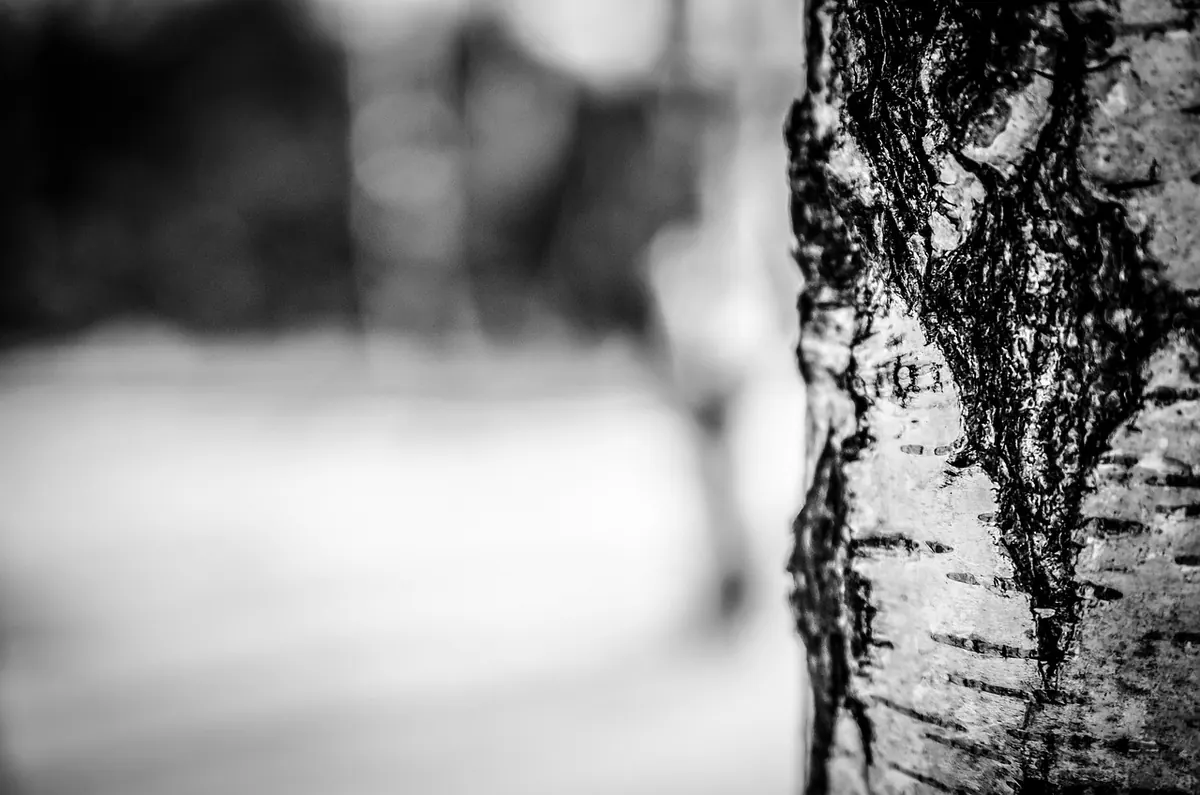
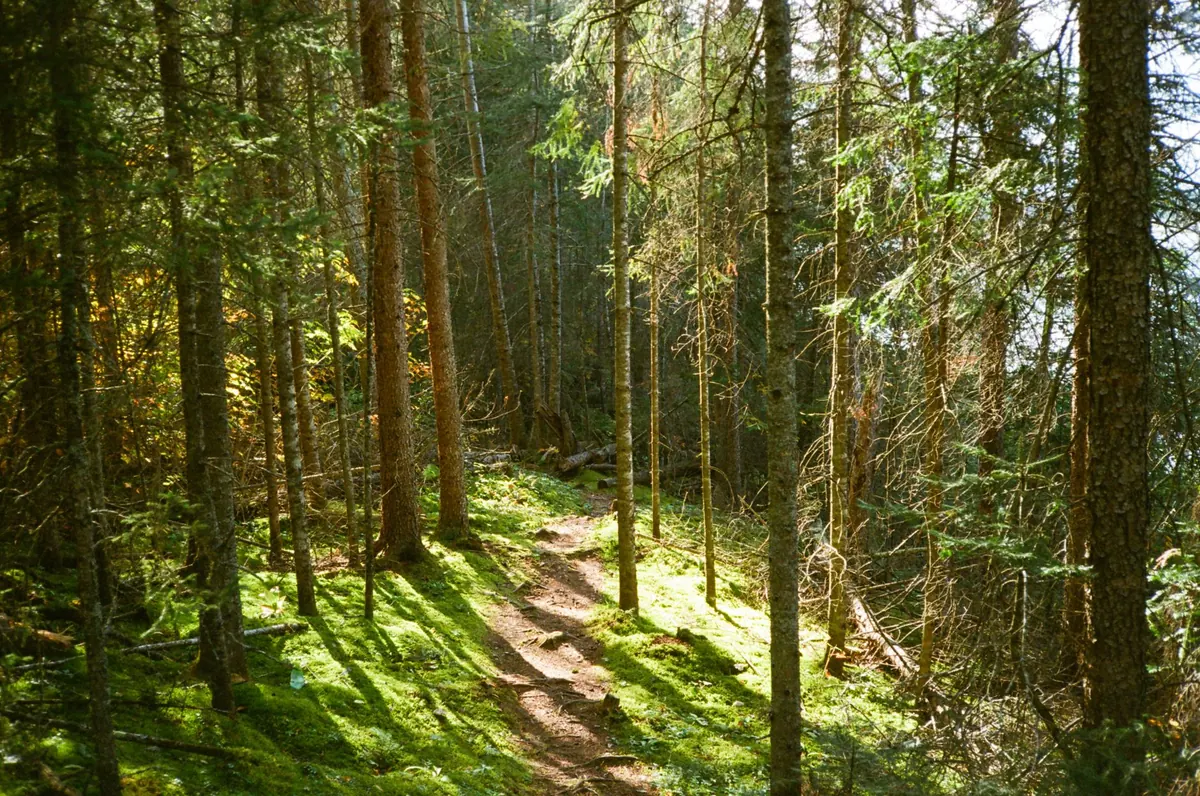
A winter wood looks as though someone has taken the colour away. The canopy is a grey scribble, the undergrowth is flattened, and every trunk seems to be the same shade of damp brown. Stand still for a few minutes, though, and the sameness begins to break up. One trunk is silver and smooth, one is cracked into dark blocks, another is peeling away in papery strips. Bark is the most dependable clue in the wood between November and April, and it is the one most people never learn.
It is not a shortcut, either. Bark carries a tree's history: how fast it grew, how much wind it took, whether it spent its youth in shade or in a clearing. Two oaks of different ages can look almost unrelated. A young oak may be smooth and grey, while an old one is a fortress of fissures and burrs. So read bark as evidence rather than as a photograph, and you will get a long way. Treat every trunk as a small case file: shape, site, texture, colour and what is growing on it all count.
Start with the outline, not the bark
From ten or fifteen metres away you can read things that close-up texture will never tell you. The site comes first. Wet, heavy ground and a broad, open crown point towards alder or willow; a tall, clean trunk on a dry slope, with the crown starting high, suggests beech or pine.
Silhouette comes next. Oak holds heavy, crooked limbs low down and often keeps a wide, battered crown. Ash sends its main branches upward in an upswept fan, so the whole tree looks narrow and tidy from a distance. Birch, even leafless, has a fine, drooping haze of twigs at the top that is hard to mistake.
Light matters too. A trunk that looks flat grey in drizzle can look almost black against a low winter sun. If a tree puzzles you, come back on a brighter day and look again. Bark colour is real, but it is never quite as constant as the pattern beneath it.
The base of the trunk
The base is where trees give themselves away. Beech usually has a smooth, swelling root flare, like the ankle of a large animal. Hornbeam keeps its fluted, sinewy shape all the way down to the ground, with no clean join between trunk and root. Elm often carries a skirt of suckers around its feet. Old oaks develop buttresses and sometimes hollows so deep you could put an arm in them.
Look at the ground as well. A carpet of copper leaves under a smooth grey trunk is a strong hint of beech, even before you look up. Cherry often leaves a ring of fallen fruit stones and dark twigs, while alder cones and willow catkins can litter the damp ground beneath their parents.
Then move in close
Only once you have a working hypothesis should you walk up and look at texture. That order matters. An oak's deep fissures look remarkably like an ash's until you remember that the oak is standing open-grown in a field with a crooked crown.
Use your hands as well as your eyes. Oak ridges feel hard and square-edged; elm can feel corky and slightly spongy; beech feels cool and smooth, like a stone that has been in the shade. Never peel bark from a living tree, though. Look, touch lightly, and leave the surface as you found it.
Smooth bark: beech, hornbeam, holly and young ash
Bark that looks like skin rather than armour narrows the field quickly.
Beech is the classic: thin, silver-grey, faintly creased with horizontal lines, and inclined to grow a green film of algae on its shaded side. On very old trees the surface breaks into shallow scales and looks almost like elephant hide. Look up for long, sharp, cigar-shaped brown buds, and look down for a carpet of copper leaves. Beech hedges hold their dead leaves right through winter, which is a useful confirmation.
Hornbeam is grey and smooth too, but the trunk is fluted, with sinewy ridges running up it like the tendons of a flexed forearm. It is a smaller, harder-looking tree than beech and often grows on heavy clay.
Holly has thin, smooth, grey bark with a purple tinge. Its evergreen leaves settle the identification before you get within three metres.
Young ash is smooth and grey as well, which trips people up. The difference is in the trunk: ash grows straighter and its grey turns duller and more uniform with age, and there are usually fine vertical lines developing near the base.
Smoothness alone is not a verdict. Young sycamore and young oak can be surprisingly smooth, so check the buds, the branching pattern and the ground beneath before you decide.
Ridged and furrowed bark: oak, ash, elm and sweet chestnut
Deep vertical cracks mean the tree is expanding faster than its outer layer can stretch. The direction and pattern of those cracks is what you are reading.
Oak is thick, dark grey-brown, broken into blocky plates separated by deep vertical fissures. The ridges feel hard and square-edged under the hand. Burrs, seams and old wounds are common, and so is a coating of pale lichen on one side.
Ash, once mature, has a surprisingly regular pattern of diamond-shaped ridges. The fissures run up and down and are crossed by shorter, broken joins, so the trunk looks like a net pulled tight over a post. Orderly, compared with oak's chaos.
Elm fissures interlock and cross rather than running straight, which gives a woven or netted look. On field elm and English elm the bark often feels corky and slightly spongy under the thumb. Wych elm, by contrast, stays smoother and greyer for much longer.
Sweet chestnut has ridges that spiral gently up the trunk, twisting like rope. Once you have seen it you will spot it from twenty paces.
Age changes everything here. A young oak can be almost smooth and grey, and an old ash can be deeply furrowed. Use the pattern, but check it against the tree's size and situation.
Peeling, papery and plated bark
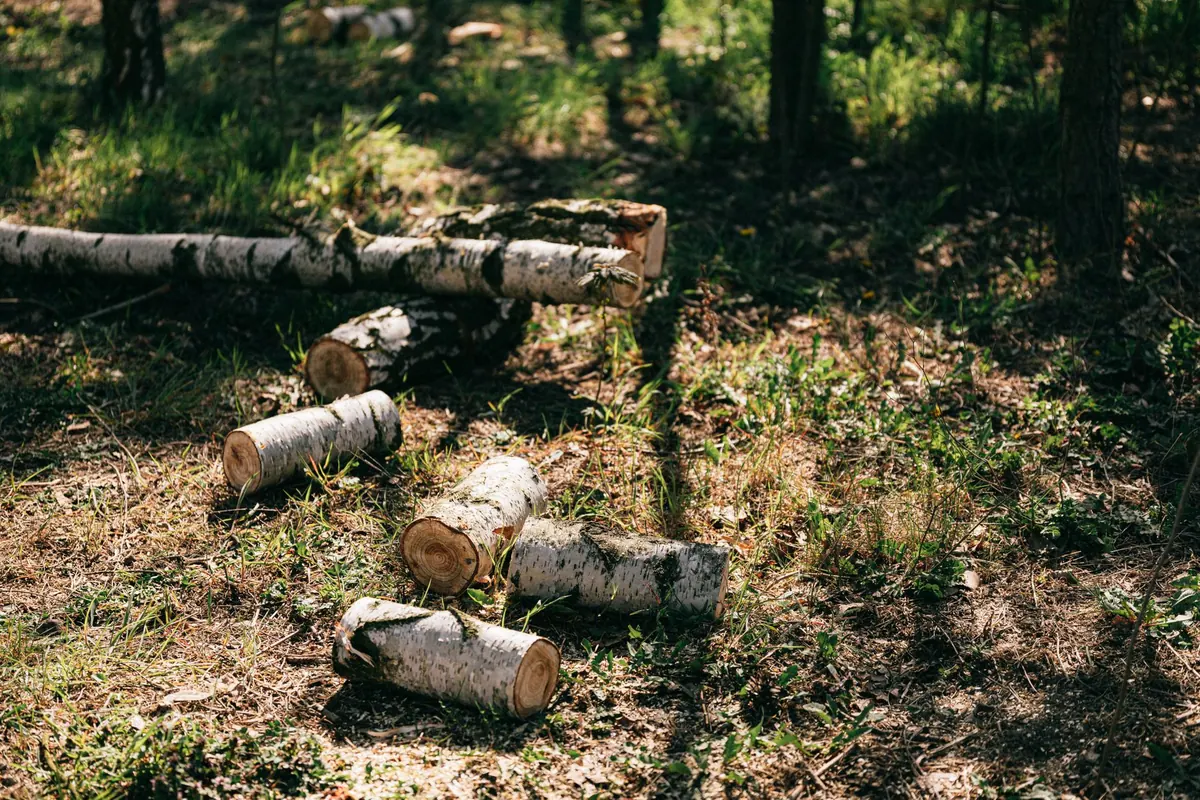
Silver birch is white and chalky, peeling in thin horizontal ribbons, with black diamond-shaped fissures that widen towards the base. Downy birch, its close relative, is greyer and browner, peels far less, and shows finer horizontal lines on the young twigs.
Wild cherry has red-brown bark that peels in horizontal strips and is banded with raised, horizontal lenticels. These are the small breathing pores of the bark, and on cherry they are often conspicuous enough to read like dashes of Braille. Older trees darken and roughen near the base, but the upper trunk usually keeps that glossy, striped look.
Sycamore flakes in irregular plates, revealing patches of grey, buff and faint pink beneath. It can look like a jigsaw that has been taken apart and badly reassembled. Scots pine is different again: grey-brown plates low down, but a warm orange-red upper trunk that catches the winter light.
Peeling bark is usually about expansion and weather. It is also a reminder that bark is not one solid skin but a set of layers, some living and some dead, doing different jobs at different ages.
Five bark clues worth recording
If you want to learn bark rather than just admire it, carry a notebook and record the same five things each time. A simple list makes you look more carefully.
- Texture before colour. Decide whether the surface is smooth, ridged, scaly, plated, peeling or corky before you name a colour.
- Pattern direction. Note whether the cracks run vertically, horizontally, diamond-wise, spirally or in an interlocking net.
- Lenticels. Look for raised dashes, dots or bands. They are especially useful on birch, cherry and young shoots.
- The base and root flare. Check whether the trunk meets the ground cleanly, in a swelling flare, in flutes, or in a thicket of suckers.
- Associated evidence. Record buds, twigs, fallen leaves, fruit, cones, dead leaves on hedges and anything growing on the bark itself.
Do this for a dozen trees and you will start to recognise the same signatures again without needing to think through every step.
Common mistakes in winter bark identification
- Judging colour in poor light. Damp bark looks darker and greyer than dry bark, and low sun can make a silver trunk glow like white metal.
- Ignoring age. Young and old trees of the same species can look like different species. Always ask whether you are looking at a sapling, a mature tree or an ancient one.
- Mistaking algae, moss and lichen for bark. Green film, orange patches and pale rosettes are passengers, not the tree itself.
- Forgetting the buds. Winter twigs are often the decisive clue: beech buds are long and sharp, oak buds are clustered and blunt, ash buds are black and opposite.
- Stopping at one clue. Bark is strong evidence, but it is best read with silhouette, site and ground litter.
Bark is a record of growth, not a label. Use it with the shape of the tree, the ground beneath it and the buds above it.
The more you practise, the more the winter wood stops looking uniform. A silver trunk with horizontal dashes becomes birch; a fluted grey column becomes hornbeam; a dark blocky fortress becomes oak. None of that needs leaves. It only needs you to slow down, start with the outline, and then move in close enough to read the surface.
Photo: jarmoluk / Pixabay